The Early History of Leechburg
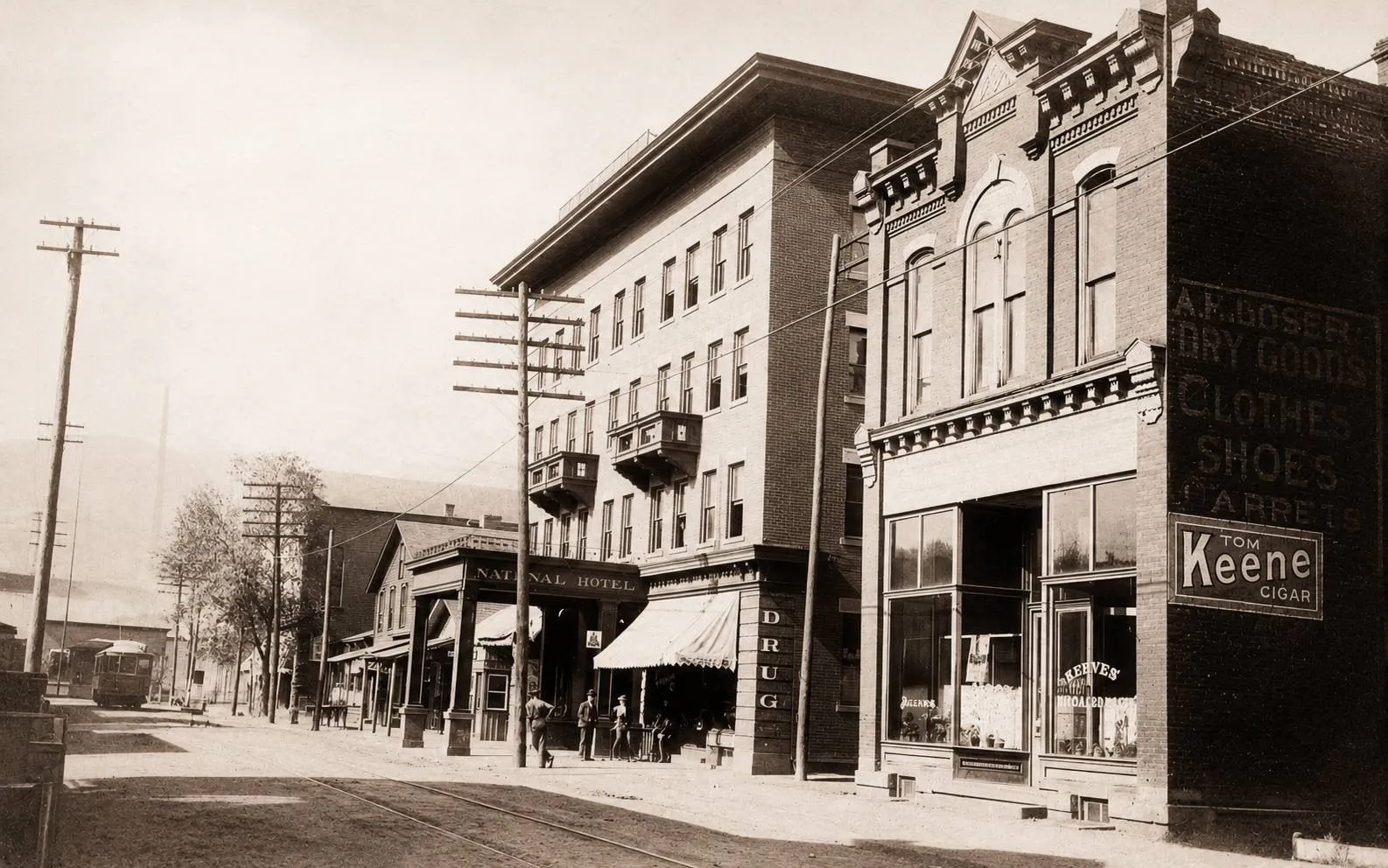
An adaptation of the 1883 History of Armstrong County, Pennsylvania account of Leechburg, with archaic wording modernized and historically biased or outdated language removed.
Source basis: R. W. Smith, History of Armstrong County, Pennsylvania, published in 1883 by Waterman, Watkins, as digitized by the University of Pittsburgh Library System. The original chapter uses the historic spelling “Leechburgh.” This report uses the modern spelling “Leechburg” except when discussing historic names or quoted titles.
How does this report adapt the 1883 source
The 1883 text is useful, but it reflects the vocabulary, priorities, and omissions of its time. This version is written for modern readers. It summarizes rather than transcribes, corrects obvious OCR artifacts, avoids outdated racial classifications, and replaces period phrases such as “war of the rebellion” with standard modern wording such as “Civil War.”
The original account begins with colonial land warrants and the development of boroughs. It does not provide a full account of earlier Indigenous histories, environmental change, labor conditions, women’s lives, or the experiences of residents outside the town’s civic and business leadership. Those omissions should be named if this report is published as local history.
Overview
Leechburg developed in a bend of the Kiskiminetas River, in what had formerly been part of Allegheny Township. The 1883 account places the town on land associated with the John Vanderen tract, originally warranted in 1773. Before the Pennsylvania Canal reached the area, the site had only a small number of residents and improvements.
The town’s growth was closely tied to canal construction, river crossings, water power, and later industry. David Leech acquired land in the late 1820s and laid out the town around 1828. The place had earlier associations with names including “Friendship” and “White Plains.”
Key Dates
- 1773: The John Vanderen tract was warranted, according to the 1883 account.
- 1783: White Matlock received a patent for land in the southern part of the tract.
- 1826: The route of the Pennsylvania Canal was surveyed through the region.
- 1827: A major flood damaged canal works along the Kiskiminetas, including part of the large dam near the future town.
- 1828: David Leech laid out the town of Leechburg, according to the 1883 account.
- 1828-1829: Canal boats began operating from Pittsburgh to Blairsville.
- 1832: The first separate assessment list for Leechburg taxables was made.
- 1838: The steamboat New Castle traveled up the Kiskiminetas to Leechburg because of a canal slip above Freeport.
- 1844: Presbyterian and Lutheran congregations were formally organized in Leechburg.
- 1850: Leechburg was incorporated as a borough.
- 1864: The Leechburg Cemetery Company and the Lutheran Leechburgh Institute were incorporated.
- 1872-1874: Rogers & Burchfield developed extensive iron and tin works in the borough.
- 1875: A public school building was erected, and a new river bridge project followed flood damage to the previous bridge.
The canal era and the founding of the town
The Pennsylvania Canal made Leechburg a practical settlement and commercial point. David Leech and his associates contracted for canal infrastructure, including a lock and a large dam across the Kiskiminetas. The dam was first known as the “Big Dam” and later as the Leechburg dam or Dam No. 1.
Flooding repeatedly affected the early works. A November 1827 freshet (a sudden overflowing or swelling of a river or stream, typically caused by heavy spring rains or melting winter snow and ice) damaged the dam and towpath, and a later flood in July 1831 disrupted canal navigation again. Engineers eventually selected a new lock-and-dam site downstream, within the town’s limits.
Leech was also involved in boat construction. The 1883 account describes early freight and passenger canal boats, including the Pioneer, Pennsylvania, DeWitt Clinton, and Gen. Leacock. It also preserves a colorful story about the competition between canal boats racing to Pittsburgh after repairs near Freeport.
Borough incorporation and civic organization
Leechburg was incorporated as a borough by an act dated March 22, 1850. The charter defined the borough’s boundaries and established a local government led by a burgess and town council. The first borough government appears to have been organized in 1851, with David Leech as the first burgess.
The town’s early civic structure included council members, justices of the peace, election officials, assessors, overseers of people with low incomes, and school directors. These offices reflect the structure of mid-19th-century Pennsylvania borough government.
Churches and religious life
Religious services began before formal church organization. Lutheran and Presbyterian clergy preached in Leechburg during the town’s early years.
Presbyterian church
The Presbyterian church was organized in 1844. Its church building was erected around 1850 at Main and First streets. By the time of the 1883 history, the congregation reported 178 members and 130 Sabbath school scholars.
Hebron Evangelical Lutheran church
The Hebron Evangelical Lutheran church was organized in 1844 and incorporated in 1848. Its early brick building stood on Back Street at the head of Second Street.
Methodist church
The Methodist congregation held early services in a small schoolhouse. Around 1846, a brick building was erected at the intersection of Main Street and Spring Alley, later replaced by a frame building.
Baptist church
A Baptist church was organized in 1873. Its frame Gothic-style building at Third Street and Siberian Avenue was begun in 1875 and had not been completed when the 1883 account was prepared.
The 1883 source devotes substantial space to a Lutheran church property dispute that grew from a broader division within Lutheran synods after the Civil War. For a modern local report, that dispute can be summarized as an institutional and legal conflict over church affiliation, property control, and congregational authority. The essential result was a split into two Lutheran groups, each continuing its own congregational life.
Schools and education
Education began in a small frame schoolhouse built by David Leech before the public school system was established. In 1830, residents gathered there for a public exhibition by pupils, and the meeting formally thanked Leech for funding the building, furnishings, and fuel.
A larger one-story frame schoolhouse was built in 1843. In 1875, a more substantial public school building was erected on a lot bounded by Siberian Avenue, First Street, Back Street, and Spring Alley. The 1883 account describes it as a two-story brick structure with a stone-walled basement, well-lit classrooms, and space for public exercises.
| School year | Reported schools | Reported enrollment details | Notes |
|---|---|---|---|
| 1860 | 1 | 70 scholars listed, with an average attendance of 47 | Six-month term; one male teacher |
| 1876 | 4 grades | 271 scholars listed, with an average attendance of 191 | One male and three female teachers |
Two private or semi-private institutes also operated during the mid-19th century. The Leechburgh Institute was established around 1857-1858 for higher education. The Lutheran Leechburgh Institute was incorporated in 1864 and served both boys and girls in common and advanced branches before closing in 1869. The 1883 author suggested that a single broadly supported institute might have had a better chance of long-term success.
Physicians, cemetery, and river crossing
The town’s first resident physician was Dr. George W. Marchand. The 1883 account lists a succession of physicians who practiced in Leechburg or later moved to nearby communities such as Kittanning and Freeport.
The Leechburg Cemetery Company was incorporated in 1864. Its grounds were located between Back Street and Siberian Avenue, near Spring and Bridge alleys. The source notes that by the 1870s, the cemetery had begun selling lots, though regular streets and walks had not yet been fully opened.
Before the bridge was built, people crossed the Kiskiminetas by canoe and boat. A bridge company was authorized in 1832, and multiple bridges were built, damaged, or replaced after floods and ice gorges. A new bridge, built after the 1875 ice-gorge damage, opened for use on Christmas Day of that year.
Industry, manufacturing, and natural gas
Manufacturing grew with the town. Early industries included a tannery, sawmill, gristmill, woolen factory, and later brickmaking. The most significant industrial development in the 1870s was the construction of iron and tin works by Rogers & Burchfield.
The iron and tin works included puddling furnaces, heating furnaces, rolls, shears, boilers, and a large engine. The 1883 account states that the works employed about 150 people before suspending operations on September 19, 1875.
Natural gas became important to the town’s industry and public life. A gas well on the opposite side of the river supplied the works through iron pipes. The source describes gas as cheaper than coal and cleaner for iron production. It was also used for public illumination via a tall pipe near the rolling mill, casting light over the town at night.
Commerce, civic groups, and public causes
By the time of the 1883 account, Leechburg had eighteen mercantile establishments listed in the appraiser’s records. These included stores, grocery stores, drugstores, and tailoring businesses. The town also had ministers, physicians, teachers, tradespeople, laborers, miners, mechanics, and industrial workers.
The post office was established on November 18, 1829, with David Leech as the first postmaster.
During the Civil War, residents organized relief work for soldiers. The Soldiers’ Aid Society sent supplies, clothing, fruit, and money to support wounded soldiers and military hospitals. The 1883 account emphasizes the work of local women in collecting materials, sewing, organizing supplies, and holding meetings.
Fraternal and mutual-aid societies also formed in the borough, including Odd Fellows lodges, the Knights of Pythias, the Order of American Mechanics, and the Order of United Workmen. The Leechburg Banking Company began business in 1873.
Temperance and population
Temperance organizing had a visible presence in the borough. The 1883 account states that many residents opposed licenses for the sale of alcoholic beverages, leading to a special 1866 act prohibiting sales within borough limits. In a 1873 vote on the license question, the source reports 6 votes for license and 77 against.
The source provides population figures for 1860, 1870, and an estimated total for 1876. In this modern adaptation, the population is reported without reproducing the 19th-century racial categories used by the original text.
| Year | Population detail from source |
|---|---|
| 1860 | 359 total residents reported |
| 1870 | 368 total residents reported |
| 1876 | Estimated at 1,288 residents based on taxables |
Publication notes
Disclaimer: This report is adapted from an 1883 county history. It preserves the broad facts and chronology of that source but modernizes the wording and removes language that is inappropriate for a contemporary public audience. The source reflects the viewpoint and limitations of its time and should be supplemented with additional records where possible.
Source: Smith, R. W. (1883). History of Armstrong County, Pennsylvania. Waterman, Watkins. University of Pittsburgh Library System Digital Collections. https://digital.library.pitt.edu/islandora/object/pitt:31735056287661